More Tags:
Miscellaneous
Military
Circus
Birthdays
Conversations
Diamonds
Dirt
Frames
Get Well Soon
Gifts
Jewelry
Neon
Paper
Retro
Scratches
Stuff
Tattoos
Thank You
Mythical Creatures
Hopscotch
Fish Bowls
Buildings
Shows
Art
Horoscope
Chinese Horoscope
Chinese Horoscope Kids
Chinese Horoscope Characters
Roman Numerals
Chinese Numbers
Sand
Red Roses Numbers
Out Of Order Signs
Passports
Pez Dispensers
Elevators
Electric Chairs
Paint Splatter
Toothpaste
Envelopes
Graveyard
Celtic Knots
Shapes
Clipboards
Numbers
Rubys
Coal
Wool
Windmills
Safety Symbols and Signs
Voodoo Dolls
English Pounds
Lens Flares
Broken Glass
Grunge Banners
Phone Booths
Escalators
Bank Signs
Lighthouses
Origami
Lego Ninjago
First Aid Kits
Aspirin
Silhouettes
Dodgem Cars
Footprints
Sand Castles
Chimneys
Mickeys Hands
Barbed Wire
Alphabet
Music Symbols
Pharmacy
Washing
For Rent Sale Signs
Discount Signs
Bales
Weapons
Newspapers
Fire Hydrants
Guarantee Stamps
On Air Signs
Meeting Signs
Gps
London Boroughs
Wedding Anniversaries
Cryptokitties
Crypto Currencies
Letter Roundlets
Parachutes
Diet
Sewing Kits
Pie Charts
Camping Tents
Caution Signs
Nooses
Slow Down Signs
Hatchimals
Poison
Hammer and Sickle
Tea Bags
Tally marks record quantities with simple strokes, making them easy to add as items are counted. A common convention groups strokes in fives: four upright marks are crossed by a fifth, so totals can be read and compared in compact groups. The collection brings together examples of individual counts and rows of marks, along with the related idea of tally sticks. Historically, notched sticks served as physical records of quantities or transactions; the exact methods varied by place and period. Together, these examples connect the basic visual logic of tallying with a form of recordkeeping that predates modern written numerals.
20 images tagged with Tally Marks:
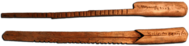
Medieval Tally Sticks
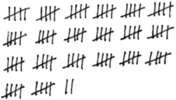
Rows of Tally Marks
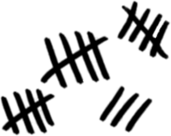
Tally of Eighteen
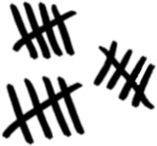
Tally of Fifteen

Tally of Five

Tally of Four

Tally of One
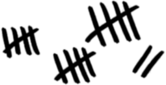
Tally of Seventeen
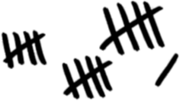
Tally of Sixteen
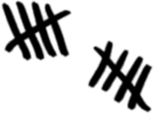
Tally of Ten
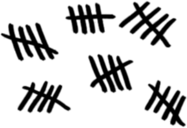
Tally of Thirty

Tally of Three
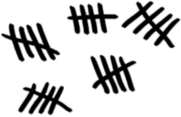
Tally of Twenty Five
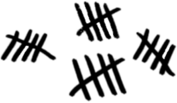
Tally of Twenty

Tally of Two
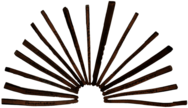
Tally Sticks

Tally from one to five
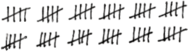
Two Full Rows of Tally Marks
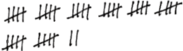
Two Rows of Tally Marks